Consequently, personalised jewelry making has changed from a specialised service to a common commercial practice. CAD software allows designers to generate complex digital models with incredible precision before the start of manufacturing. By 2026 CAD systems should be significantly more advanced, with better visualisation capabilities and quicker design processes. These technologies enable producers to develop complicated jewellery structures that are difficult to build using standard drawing approaches.
Customers may see their jewellery before it’s made, thanks to the capabilities of producing realistic 3D models. This helps businesses, designers and clients communicate better and reduces the chances of expensive changes later in the production process.
CAD technology at Custom Jewelry Manufacturers will remain a need for jewellery manufacturers that want to provide accuracy, creativity and efficiency in bespoke production as design requirements continue to increase.
The use of 3D printing technology is still on the rise in the jewellery trade. What started as a prototype tool is now a staple in the creation of personalised jewellery. In a market increasingly driven by personalisation, the capacity to develop and improve individual products fast is becoming a competitive advantage for manufacturers.
Sustainability Is The New Manufacturing Norm
Sustainability is not an optional factor for jewellery businesses anymore. Not only are consumers making product choices based on their environmental and ethical effect, but businesses need to adopt sustainable manufacturing techniques.
In response, custom jewellery producers are creating ecologically friendly manufacturing processes. The utilisation of recycled precious metals has increased to assist lessen the need for freshly mined resources. Lab-grown diamonds are one of the biggest advancements in the jewellery business in the last decade. They are projected to keep rising in popularity in premium and mainstream markets in 2026.
These diamonds let clients to buy bigger or better quality stones for their budget, with the peace of mind that comes with knowing the product’s ethical sourcing.
As consumer knowledge grows, lab-grown diamonds are expected to continue to be an essential part of personalised jewellery production plans.
Digital Manufacturing Is Making Things More Efficient
The jewellery manufacturing industry is undergoing a sea change to digital manufacturing systems. Digital manufacturing is the integration of design, production planning, quality control, and workflow management into one process. Digital production provides various benefits for jewellery manufacturers. Shorter manufacturing cycles allow us to respond more quickly to market developments and client needs. The benefits of improved accuracy mean quality standards are maintained in huge quantities of bespoke orders.
The acceleration of digital transformation will see firms that are using linked production technology better positioned to compete in a fast-changing environment.
Demand-Driven Manufacturing Is Revolutionising Inventory Management
The manufacture of traditional jewellery sometimes depends on the creation of vast inventories to meet expected future demand. However, shifting customer tastes and economic uncertainty have led many firms to shift to on-demand production strategies.
This technique is well-suited to the manufacture of personalised jewellery, as things are made to order. As inventory management becomes more critical, more jewellery businesses are likely to use on-demand production in their business strategies.
Artificial Intelligence Is Shaping Jewellery Development
Manufacturers are providing more creative freedom and collaborative design services. “The ability to translate personal stories into wearable art is becoming a key differentiator for successful jewellery brands.”
As emotional connection continues to influence buying choices, meaningful design will continue to be a strong trend in bespoke jewellery manufacture.
Coloured Gemstones Are Getting Popular
Today’s customers want ease and quickness in every area of purchase, including jewellery. Therefore, manufacturers are decreasing manufacturing deadlines without sacrificing quality.
The development and production cycles of products have been shortened because to CAD design, digital manufacturing and 3D printing. Better communication technologies also assist to facilitate cooperation between clients, designers and manufacturers more smoothly.
Brands that can provide bespoke jewellery on time without compromising workmanship have a huge edge over the competition. Faster turnarounds lead to greater customer satisfaction and enable stronger corporate development. These advances provide for more immersive shopping experiences and boost trust in purchase choices.
Customer experience will be an ever more critical aspect of the success of bespoke jewellery manufacture as technology advances.
Quality and Precision are Still Key Priorities
Even with the fast technical progress, quality is the basis of successful jewellery manufacture. We are seeing a new wave of innovation in the jewellery business in which customisation, technology, sustainability and consumer-centric design are transforming the way jewellery is designed and marketed. The client expectations have changed dramatically in the last several years. This makes it more efficient with less chance for expensive manufacturing failures. Jewellery businesses get speedier design approvals, increased contact with clients and more accurate final goods.
Realistic three dimensional drawings can help customers better grasp their unique products. The opportunity to see a design from numerous perspectives prior to manufacture builds confidence and pleasure throughout the whole buying process.
As designs get more complicated, CAD technology will continue to be one of the most significant instruments in the bespoke jewellery manufacture.
In bespoke jewellery making, 3D printing allows producers to build extremely detailed wax models and prototypes with incredible precision. It is now possible to make complex designs efficiently that would be difficult or time-consuming to construct using old approaches.
This technology dramatically reduces development times and gives designers more latitude in their creativity. Brands might try out new structures, detailed patterns and design ideas that are not typical yet do not make manufacturing harder. Because of advances in manufacturing technology, lab-grown diamonds are now essentially indistinguishable from natural diamonds in appearance, durability and chemical composition. Consumers like the mix of price, ethical sourcing, and environmental advantages.
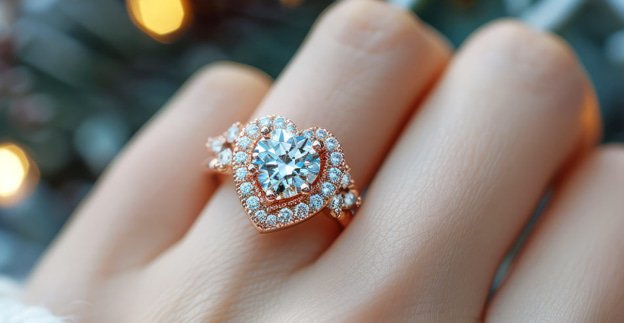
Custom jewellery manufacture has jumped on this trend by using lab-grown diamonds in a variety of items from engagement rings and wedding jewellery to fashion collections. These diamonds allow more freedom to consumers to construct their own unique creations while holding to a high level of quality and beauty.
With the increasing market demand, jewellery businesses providing lab-grown diamond choices would be able to serve a larger client base.
Summary
Custom Jewelry Manufacturers may use the best knowledge to produce items that satisfy customer demand and reduce the chance of collections failing.
Manufacturers are also employing AI to improve production planning, quality control and the efficiency of operations.