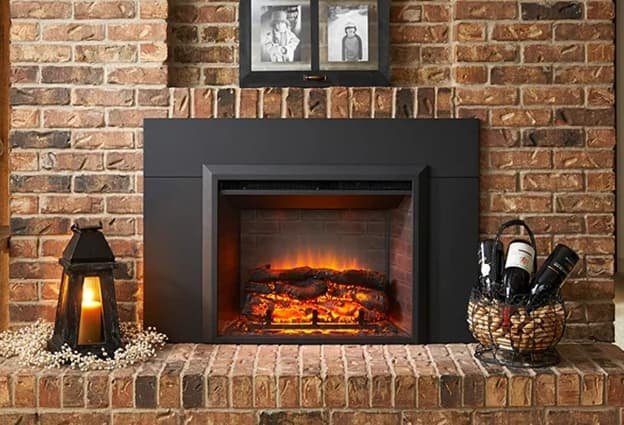
Electric fires have improved considerably — the LED flame effects are more convincing than they used to be, and the heat output is perfectly adequate for most rooms. But spend an evening in a room with a real fire burning, then spend one with the best electric alternative available, and the difference is immediate and requires no particular sensitivity to design or atmosphere to register. Real flame fireplace technology has not needed to evolve in the same direction its competitors have because it was already producing something that competing formats have spent decades trying and failing to match — a quality of light, sound, and radiant warmth that occupies a room rather than merely conditioning the air temperature, and that changes how people feel in that space in ways that no thermostat setting replicates or approximates.
Radiant Heat Feels Different in the Body
Central heating warms air, which rises, stratifies, and produces a room that is technically warm but often feels slightly artificial in a way that is difficult to articulate until you contrast it directly with radiant heat from a real fire. Radiant heat warms surfaces and bodies directly — walls, floors, furniture, the people sitting nearest — which registers physically in a way that air temperature alone simply does not. This is why sitting in front of a fire on a cold evening feels more satisfying than sitting in a centrally heated room at a higher thermostat setting, even when the measured temperature is equivalent. It is also why fires continue warming a room through a bed of glowing coals long after the visible flame has reduced — a thermal persistence that no panel heater or electric element comes close to replicating across the same duration.
The Atmosphere That Organises a Room
Interior designers consistently observe that a working fireplace does something to a room that no other single element achieves with the same completeness — it makes the room feel inhabited rather than designed, active rather than static in a way that changes how long people stay and what they do whilst they are there. The flickering light from a real fire casts movement and shadow across walls and ceilings that artificial lighting cannot generate regardless of the bulb, the fitting, or the dimmer setting. The sound — occasional cracking, the low ambient hiss of burning wood — adds an auditory dimension to the atmosphere that electric alternatives have attempted and not yet successfully incorporated. A real flame fireplace contributes to a room as a sensory environment rather than just a heat source, which is a genuinely different category of domestic contribution.
What Estate Agents Consistently Report
Properties with working fireplaces — particularly original period ones with authentic surrounds, chimneys, and cast iron grates — consistently attract stronger buyer interest and command higher valuations than comparable properties without them, and this has held across multiple property market cycles rather than reflecting any particular moment in design taste. Part of this is practical: a working fireplace provides a genuine alternative heat source functioning independently of central heating, which has become more relevant as energy considerations have sharpened for a significant proportion of buyers. But part of it is simply that buyers walking into a room with a real fire immediately register that the room is different from the comparable rooms they viewed earlier that day, and that register affects what they are willing to pay before the negotiation begins.
What Blocking Original Fireplaces Actually Costs
In Victorian, Edwardian, and Georgian properties, the original fireplace was the architectural centrepiece around which each principal room’s proportions, cornicing, alcoves, and spatial composition were deliberately organised. When previous owners blocked or removed these features — usually in the pursuit of a cleaner wall or a simpler heating arrangement — they did not just eliminate a heat source, they removed the spatial reason the room is arranged the way it is, leaving spaces that feel slightly unresolved without anyone being able to identify why. Restoring an original fireplace to working condition in a period property does not simply add a feature — it returns the room to the logic it was designed around, and that change is visible immediately in how the space reads and how buyers respond to it.
What Fire Research Has Confirmed
Research into what happens physiologically when people watch a real fire has confirmed what most people already know from experience — blood pressure drops, the unfocused, relaxed mental state that contemporary life makes increasingly difficult to access becomes easier to reach, and sustained fire-watching produces measurable psychological shifts that no screensaver or simulated flame image generates in the same way. The instinct appears to be genuinely deep rather than culturally acquired, which explains something that people who install fireplaces after years without one consistently report — they use the room more, stay in it longer, and find the evenings there more satisfying than they expected before the installation was complete.
Conclusion
A real flame fireplace delivers a combination of sensory experience, practical warmth, spatial organisation, and lasting property value that competing alternatives have been working to replicate for decades without fully closing the gap. The decision to install or restore a working fireplace is grounded in differences that are immediately perceptible in the body and the room — in how the heat registers, how the light moves, how the space gets used, and what the property communicates to the next person who stands in it and registers, before anything else has been said, that there is a real fire burning in the room.