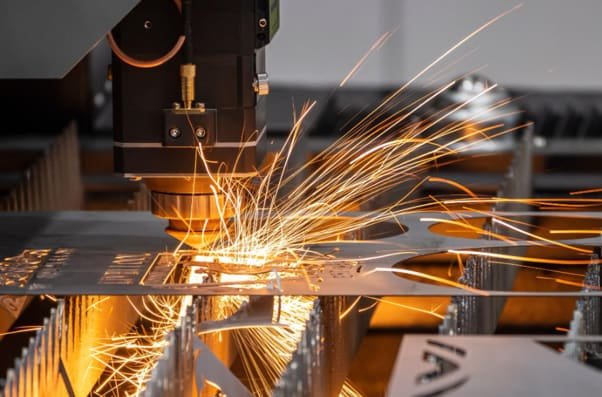
A high powered focused beam gets applied to metal along a precise path, melting, burning or vaporising it in the process, and this is how a laser cutter for aluminium sheet works to produce clean edges without any physical contact between tool and material. Due to the combination of speed, accuracy and repeatability, this method has become one of the most reliable ways for processing aluminium, even in cases where intricate shapes or thin gauges are involved which are otherwise difficult to handle with traditional cutting tools. Being naturally reflective and quick at conducting heat, aluminium is a more demanding material to cut than steel, however modern fiber laser systems are specifically made for managing these properties so that smooth, burr free results can be delivered.
Why Aluminium Behaves Differently Under a Laser
A significant portion of laser energy gets reflected by aluminium rather than absorbed, and because of this, cutting efficiency can reduce if the equipment is not calibrated in correct way. Also, high thermal conductivity is present in it, which means that heat spreads away quickly from the cutting zone instead of remaining concentrated there. For achieving a clean cut, this combination makes it necessary to use higher power settings, precise focus control and correct assist gas. Especially fiber lasers handle these challenges in good way, because compared to older CO2 laser systems, their wavelength gets better absorbed by reflective metals.
What Thickness Can Be Cut
Across a wide range of aluminium thicknesses, laser cutting works well, starting from thin sheets that are used in electronics enclosures up to thicker plates used for structural or automotive parts. For thinner sheets, which are typically under 3mm, cutting happens quickly with very fine detail, so these become ideal for small components or intricate patterns. As for thicker sheets, sometimes reaching up to 20mm or more depending on machine’s power output, accurate cutting is still possible, though speed becomes slower and kerf width slightly wider. For maintaining edge quality, it is essential that machine’s capability gets matched with sheet thickness.
Common Applications of Aluminium Laser Cutting
Because of lightweight strength and corrosion resistance of this metal, aluminium sheet cutting finds usage across many industries. Some of the typical applications are following:
- Enclosures and panels made for electrical and electronic equipment
- Signage work and architectural detailing
- Brackets and lightweight structural parts used in automotive
- Components for aerospace where tight tolerances are required
- Custom prototypes along with short run manufacturing parts
In each of these applications, benefit comes from non contact nature of laser cutting, since this reduces distortion in material and keeps dimensional accuracy consistent even across large production runs.
How Assist Gas Affects the Cut Quality
A major role is played by choice of assist gas in how finished edge will look and perform. For aluminium, nitrogen is commonly used because a clean, oxide free edge gets produced by it which mostly requires no further finishing. In some cases, oxygen also gets used, though due to exothermic reaction it triggers, a slightly rougher, oxidised edge tends to form. Where weldability and appearance matter for the application, nitrogen assisted cutting generally remains the preferred choice.
Does Laser Cutting Affect the Strength of Aluminium
Whether heat from laser cutting weakens the metal is a question that often comes up. In most of the cases, extremely narrow remains the heat affected zone, often just fractions of a millimetre, so largely unaffected stays the structural integrity of sheet. Warping or change in mechanical properties of metal gets prevented with help of proper machine settings and cutting speed, which keep heat buildup to minimum. This is one reason why for parts that require both precision and durability, laser cutting is considered trustworthy.
How Laser Cutting Compares to Other Cutting Methods
When compared with methods like mechanical shearing or plasma cutting, tighter tolerances, smoother edges and less post processing work are typically offered by laser cutting. Thicker materials can be handled faster by plasma cutting, but usually a rougher edge and wider kerf gets left behind by it. Physical stress on material can get introduced through mechanical cutting methods, which is not something that happens with laser process since it remains non contact. Because of this, when edge quality and precision are the priority, laser cutting becomes the preferred option.
Factors That Influence Cutting Speed and Accuracy
There are several variables which affect how efficiently aluminium sheet gets processed:
- Type of alloy and thickness of sheet
- Beam quality and laser power output
- Pressure and type of assist gas being used
- Condition of nozzle and focus position
- Speed of cutting relative to thickness of material
For ensuring consistent results, correctly balancing these factors becomes necessary, whether a single custom piece is involved in the job or a large batch of identical components needs to be produced.
Matching machine capability with material thickness, desired finish of edge and specific demands of application is what choosing right laser cutter for aluminium sheet ultimately comes down to. When right settings and equipment are used, aluminium can get cut with high precision, minimal waste and consistent quality across both small and large scale projects, and this is what makes laser cutting one of the most dependable methods available today for working with this versatile metal.