Most buyers send a drawing, receive a quote, and assume the rest is mechanical. It is not. The gap between a dimensionally correct part and a part that actually performs in service is filled with decisions that never appear on a technical drawing. CNC milling services sit right in the middle of that gap. The industries that understand this and choose their machining partners accordingly tend to have far fewer expensive surprises once components reach real operating conditions.
Fixturing Shapes Everything
Fixturing rarely gets discussed in client conversations, yet it governs almost everything about a finished part’s quality. When a workpiece flexes under cutting load even fractionally the cutter deflects, the surface finish degrades, and dimensions drift in ways that are frustratingly inconsistent across a batch. The problem is compounded with thin-walled components, where rigidity is inherently limited. CNC Milling Services Experienced machinists design fixturing that supports the part at the precise points where cutting forces are highest, not simply wherever clamping happens to be convenient. Getting this wrong is expensive. Getting it right is invisible which is exactly why it rarely gets the credit it deserves.
Toolpath Logic Is Not Obvious
CAM software generates toolpaths. It does not generate good judgement. A programmer who simply accepts software defaults will produce parts that work but will also burn through tooling faster than necessary, leave surface finishes that require secondary polishing, and create cycle times that make production uncompetitive. CNC milling services staffed by programmers who actively interrogate their own toolpaths questioning step-over ratios, cutter engagement angles, and lead-in geometry produce meaningfully different outcomes. CNC Milling Services The difference rarely shows up in the prototype. It becomes very clear across a production run of several hundred parts, where tooling consumption and cycle efficiency directly affect delivery reliability.
Difficult Materials Punish Complacency
Aluminium is forgiving enough that mediocre process decisions still yield acceptable results. Hardened tool steels, titanium alloys, and nickel superalloys are not. These materials expose every weakness in a machining strategy inadequate chip evacuation causes re-cutting, which work-hardens the surface and accelerates tool wear dramatically. An incorrect coolant strategy generates thermal gradients that introduce residual stress into the part, affecting fatigue performance in service even when the dimensions check out perfectly at inspection. Machinists who work with difficult materials regularly develop a process intuition that cannot be learned from a manual. CNC milling in these materials is genuinely a different discipline from standard machining, and treating it as equivalent is where costly mistakes originate.
In-Process Measurement Changes the Maths
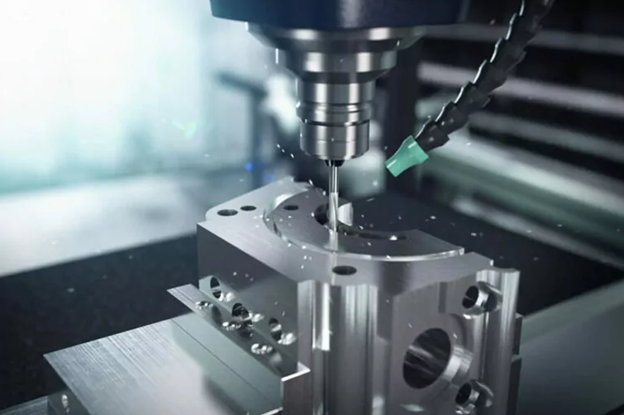
The traditional model machine the part and then inspect it creates a specific and avoidable problem. On long-cycle components, a dimensional error discovered after the final operation means scrapping not just the material but every hour of machine time invested in that piece. Touch-probe measurement integrated mid-cycle changes this entirely. The machine checks critical features during the process, applies offset corrections automatically, and catches drift before it propagates. CNC Milling Services This is particularly valuable when machining materials with inconsistent stock dimensions or when thermal growth during long cycles shifts reference positions. The upfront investment in proper probing routines pays back quickly on any batch where the cycle time is substantial.
Tolerance Discussions Need to Happen Earlier
Tolerances specified on drawings are frequently inherited from previous designs, copied from similar parts, or set conservatively without fully considering the manufacturing implications. An unnecessarily tight tolerance on a non-critical feature does not improve the part it increases setup complexity, slows cycle time, and raises rejection rates. Fabricators who raise this conversation during quoting rather than after the first-off inspection save clients considerable time. The dialogue is straightforward: which tolerances are functionally driven, and which are simply cautious defaults? Adjusting the latter whilst protecting the former often produces a faster, more reliable manufacturing process without compromising the engineering intent.
Conclusion
CNC milling services are frequently evaluated on delivery time and price alone. Both matter, but neither reveals whether a supplier actually understands the process behind the part. The machining decisions that determine long-term component performance fixturing design, toolpath strategy, in-process measurement, and material-specific cutting parameters are invisible in a finished piece. They only become visible when something fails. Manufacturers who look beyond the quote and ask harder questions of their machining partners consistently get better components, fewer rejects, and production schedules that hold under pressure.