Sheet metal fabrication services : Walk through any busy factory floor, and the evidence is immediate buckled timelines, rejected components, costly redesigns. What separates struggling manufacturers from productive ones often comes down to a single, underappreciated decision: choosing the right fabrication partner early enough. Sheet metal fabrication services are rarely glamorous. But when chosen well, they quietly determine whether a product succeeds or falls apart before it ever reaches a customer.
Tolerances That Actually Matter
There is a persistent misconception that tighter tolerances always mean better quality. In practice, over-specifying tolerances drives up scrap rates and slows production unnecessarily. Experienced fabricators push back on this. They know that an extremely tight tolerance on a non-critical bracket wastes time, whilst a sloppy fit on a load-bearing channel causes field failures. The real skill lies in knowing which dimensions genuinely need precision and which do not. That judgement only comes from fabricators who have seen thousands of real-world assemblies not just drawings on a screen.
Material Selection Runs Deeper
Most engineers gravitate to mild steel or aluminium because they are familiar with them. High-level sheet metal fabrication services, however, urge clients to think differently. Sheet metal fabrication services : Hot-rolled steel is inexpensive but leaves mill scale that interferes with welding and coating adherence. Cold-rolled produces a cleaner surface but work-hardens quicker during forming, which influences springback behaviour. Galvanized sheet saves a production step but introduces harmful fumes during welding if zinc contamination is not handled appropriately. These are actions that subtly modify lead times, finishing costs, and long-term product behaviour. Yet they seldom appear in a conventional client brief.
The Tooling Conversation Nobody Has
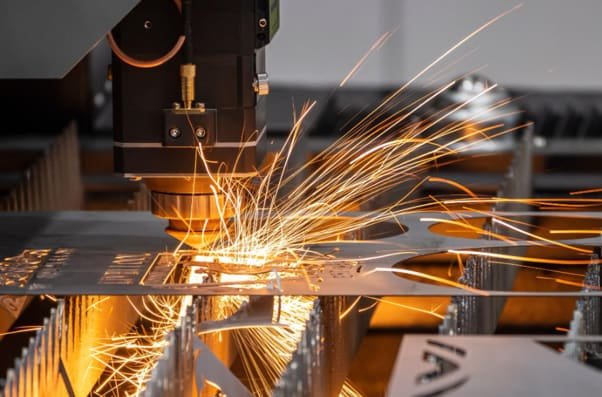
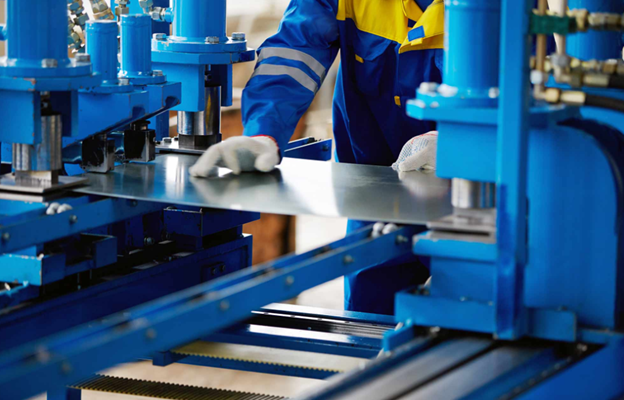
Laser cutting receives most of the attention in fabrication discussions. Tooling for press brakes and punch presses, however, is where projects genuinely slow down or gain momentum. Custom punch tooling can eliminate several secondary operations, but it demands upfront investment that only makes financial sense beyond a certain production volume. Standard tooling, meanwhile, limits the complexity of forms achievable without repeatedly repositioning the sheet. Each repositioning introduces cumulative error. Fabricators worth working with raise this conversation at the quoting stage. The ones who do not raise it tend to surface the problem only after the first production run has already gone wrong.
Finishing Is Never an Afterthought
Sheet metal fabrication services : Powder coating is applied to countless metal components and widely considered standard practice. What is far less understood is that surface preparation before coating determines almost everything about how long that finish actually lasts. Shot blasting opens the grain of the metal, improving adhesion considerably. Zinc phosphate pretreatment creates a conversion layer that actively resists corrosion forming beneath the coating. Skipping these steps produces a finish that looks perfectly fine on delivery. In harsh operating environments, though, that same finish begins to fail within months. Sheet metal fabrication done properly treats finishing as an integrated part of the process not a separate job added at the end.
Prototyping Does Not Reflect Production
A prototype produced on a flat-bed laser with hand-formed bends looks and functions correctly in the lab. The same part in full production, formed on a high-speed press brake with automated back-gauges, can behave differently. Spring back variation, material batch inconsistencies, and gradual tooling wear all introduce differences that prototype conditions never reveal. Engineers who have only seen their product at the prototype stage are sometimes genuinely surprised when production-intent samples need rework. Skilled fabricators identify these discrepancies early. They run intermediate production-intent trials that reflect real-volume conditions rather than one-off craftsmanship catching problems before tooling is committed and costs escalate.
Conclusion
Sheet metal fabrication services carry far more strategic weight than most buyers realize when they first send out a request for quotation. The difference between a competent fabricator and an exceptional one rarely shows in a price list. It shows up later in fewer field returns, faster design iterations and production schedules that actually hold. Manufacturers who treat fabrication as a commodity tend to discover its true complexity only after something goes wrong. Sheet metal fabrication services : Those who involve qualified partners early, ask harder questions, and bring fabricators into the design phase consistently face fewer surprises downstream. That upstream discipline is where the real value is built.