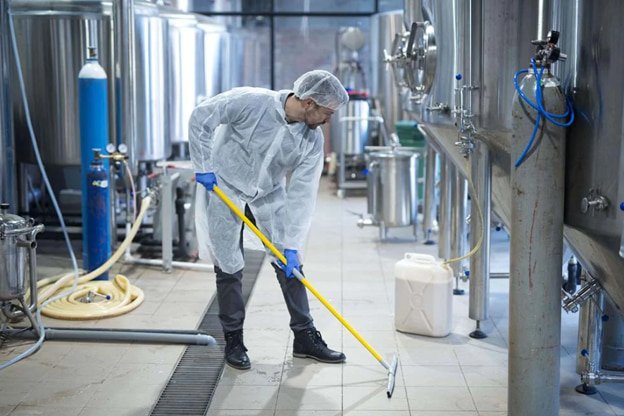
Most facility managers don’t know about the problem until something breaks. Really breaks. Like a bearing that seizes up. Nobody realized. Grease buildup got so thick it was restricting movement. Then the equipment stops. Suddenly, expensive repairs. An industrial cleaning company does something different. Not like regular janitorial services. Those companies just push dirt around. They don’t understand production equipment. Standard cleaners have never seen this stuff before. They don’t know that certain chemicals corrode precision bearings. Pressure washing destroys sensor calibration. It just happens. Manufacturing facilities accumulate contamination that standard services have never encountered. This is why facilities skipping professional industrial cleaning end up spending way more money. Fixing problems that proper maintenance would have prevented entirely. The math doesn’t work out.
What’s Actually Building Up
Industrial contamination isn’t just visible dirt. That’s the thing nobody mentions. Production residue combines with dust. Creates something like cement inside machinery. Equipment that worked fine last month suddenly fails. Something is restricting movement. Abnormal friction everywhere. Managers call maintenance people. Nobody can figure out what’s wrong. They’re not looking at contamination. The bearing isn’t broken. It’s buried under crud that prevents operation. Professional cleaners see this pattern constantly. They know exactly where problems hide. Which areas deteriorate fastest. Cleaning isn’t optional. It’s core maintenance. Facilities without this knowledge keep replacing parts. Wondering why things keep failing. Spending money on emergency repairs. Nobody connects it back to cleanliness. That’s the disconnect.
The Invisible Efficiency Loss
Production actually slows down. Equipment running through contamination works harder. Consumes more energy. Creates more heat. Stresses components prematurely. Workers spend time clearing jams. Resetting machines. Troubleshooting problems from contamination. Not focusing on actual production. This lost productivity goes invisible. Spread across multiple small inefficiencies. Not one obvious shutdown. A facility loses significant output daily. Nobody realises it’s connected to cleanliness. Professional industrial cleaning reveals this. Production rates increase noticeably after cleaning. Machines can finally operate as designed. This isn’t speculation. It’s an observable improvement. Throughput increases. Output quality improves. Managers see the difference immediately.
Safety Gets Overlooked
Regulatory inspectors’ notice. They develop a particular look when finding neglected equipment. Understand that dirty equipment means skipped maintenance. Inadequate training. Management is not prioritising safety. Single inspection violations trigger additional scrutiny. Expensive compliance headaches result. Workers notice too. When management doesn’t maintain facilities properly. It’s demoralising. Suggests their safety isn’t genuinely prioritised. Professional industrial cleaning demonstrates commitment. Shows management takes operations seriously. Signals investment in proper maintenance. Creates a better workplace culture. Demonstrates that safety protocols actually matter beyond written policies. Employees respect facilities where visible maintenance evidence is obvious.
Environmental Liability Issues
Facilities generate hazardous waste during production. Requires proper handling and disposal. Standard cleaning services have no idea. How to identify hazardous materials. How to dispose of them correctly. They might clean something that shouldn’t mix with certain chemicals. Creates dangerous situations accidentally. Professional industrial cleaning companies understand constraints. Know proper protocols. Identify hazardous materials. Handle disposal correctly. Protect facilities from violations. Environmental liability becomes real. One improper disposal incident generates fines. Penalties dwarf what professional cleaning costs. This responsibility matters more than managers realise.
Equipment Reliability Metrics
Nobody measures equipment efficiency properly. They just notice when things break. Professional industrial cleaning changes this. Clean equipment performs consistently. Predictably. Breakdown rates decrease. Maintenance becomes genuinely preventive. Not constantly reactive. Production schedules stop getting disrupted. Unexpected failures happen less frequently. Facilities with professional partnerships report stable operations. Fewer surprises. This reliability extends to employee safety. Equipment failures causing injuries become less likely. Workers feel safer. Confidence increases.
Operational Transformation Reality
The transformation isn’t dramatic. It’s subtle. Things just work better. Equipment performs as intended. No unexpected failures. No emergency repairs disrupting schedules. Workers have confidence in the equipment. The facility functions smoothly. Management can focus on growth. Not firefighting constant problems. Professional cleaning becomes preventive. Not reactive. Facilities operate differently. More efficiently. More safely. More reliably.
Conclusion
An industrial cleaning company solves problems most facility managers don’t recognize until they’re expensive and dangerous. Contamination affects everything simultaneously. Equipment longevity. Production efficiency. Safety. Environmental compliance. Worker morale. Professional cleaning isn’t luxury maintenance. It’s fundamental to making facilities function as intended. Really functions. Not just survive.